
Disaster Preparedness Checklist for Florida Property Managers and HOAs
A practical hurricane-season checklist for Florida property managers and HOA boards — before, during, and after the storm, including what FEMA assistance actually requires.
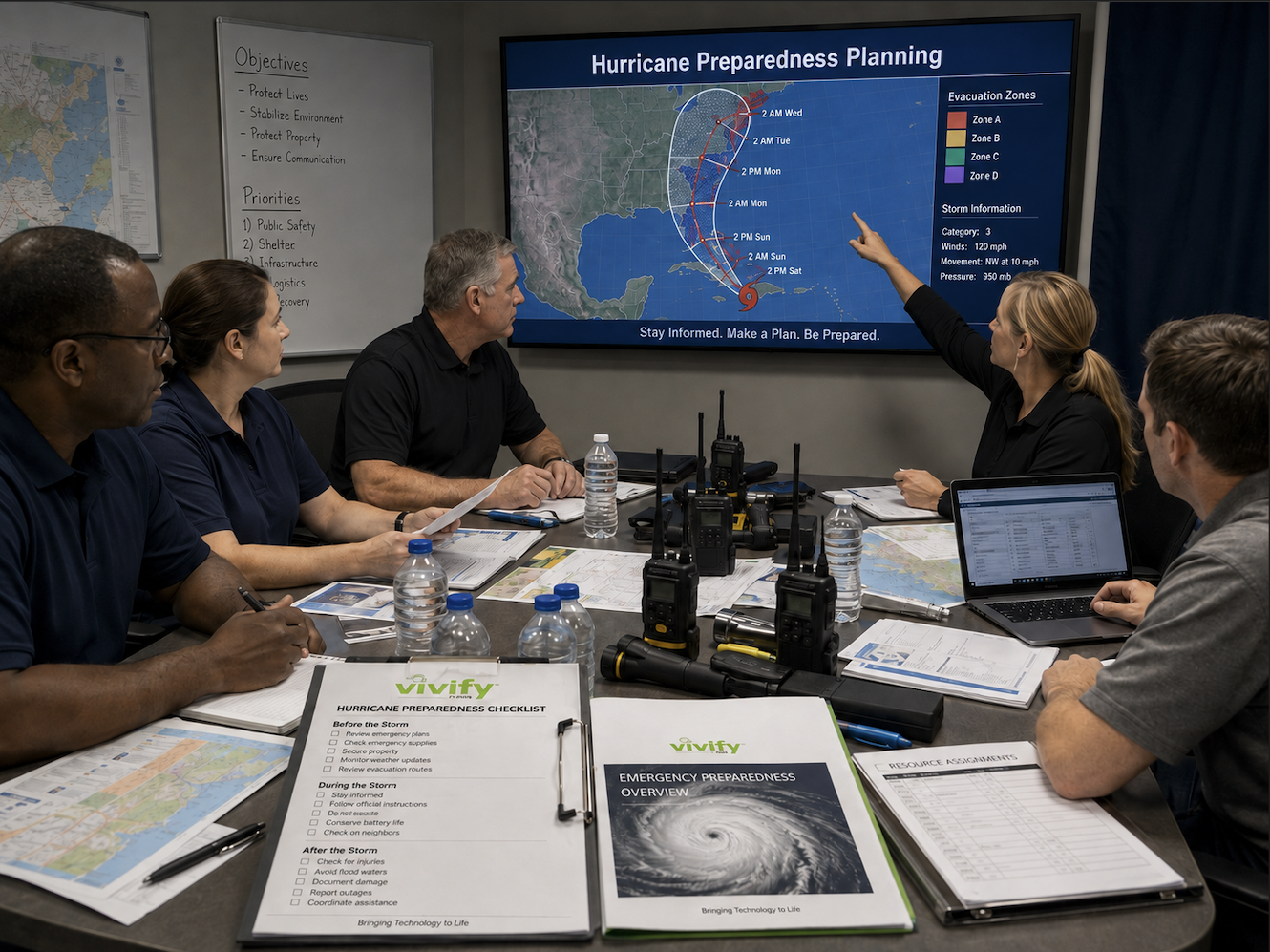
Key takeaways
- Assign responsibilities, confirm vendors, and prepare resident communications before storm season.
- Identify critical common-area systems and check backup power readiness before a storm arrives.
- Document damage, keep recovery records, and review the plan after each storm.
A Florida HOA hurricane preparedness plan gives the board, property manager, vendors, and residents a shared set of actions before extreme weather arrives. Assign responsibilities early so urgent decisions do not depend on finding the right person during an outage. Effective HOA management and community management depend on keeping that plan accessible and current.
Start with county emergency-management guidance and the National Hurricane Center for forecasts. Use the checklist below to turn those resources into a community plan, then review insurance and property-specific obligations with your advisers.
Before Hurricane Season Begins (By June 1)
Review common-area insurance and flood coverage with your insurer. Arrange a roof inspection and check drainage, trees, and other maintenance issues before the season. Record follow-up work and who is responsible for completing it.
Document a clear chain of command: who contacts vendors, who updates residents, who coordinates with emergency services. Write it down and distribute it before you need it.
Line up vendors in advance, such as tree removal, debris hauling, and generator service. The board that confirms vendors in April is the one that gets served in September, when every crew within a hundred miles is already booked.
Register your community's contact information and preferred communication channels (text, email, resident portal) so updates can go out fast once a storm is named.
When a Storm Enters the Forecast
Activate the communication plan immediately. Residents should hear from the board before they have to go looking for information.
Secure or remove loose common-area items: furniture, signage, and equipment that can become debris in high wind.
Confirm backup power readiness for any critical common-area systems — including gate access, elevators, well pumps, lift stations — before the storm arrives, not after.
Take date-stamped photographs of common areas, roofs where safely accessible, and key equipment. Store copies where the management team can access them if the property office loses power.
Backup Power: The Piece Most Plans Get Wrong
A generator sitting in a maintenance shed isn't a power plan. It's an assumption that fuel delivery, technician access, and clear roads will all still work after a hurricane, which is exactly what a hurricane tends to disrupt first. For common-area systems where an outage turns into a safety hazard — trapped elevator passengers, failed lift stations, gates that won't open for emergency access — the same fuel-logistics vulnerability applies to an HOA as it does to any other property.
VIVIFY's Flying Pig™ is a containerized hydrogen power system built around that gap: a water-based fuel input rather than a diesel supply chain, with field assembly measured in hours. It's designed for exactly the scenario a board is planning around: critical systems that need to keep running when the grid and the roads are both compromised.
After the Storm
Document damage thoroughly before cleanup begins with photos and video, dated and organized by location.
File insurance claims promptly and keep a complete paper trail of all correspondence and estimates.
Do not assume a disaster declaration makes an HOA eligible for FEMA Public Assistance. Homeowners' associations are generally ineligible, with limited exceptions. Nonprofit status alone does not establish eligibility. Ask state emergency management about the specific applicant, facility, and work requirements before including assistance in the recovery budget.
Hold a post-storm board review while the experience is fresh: what worked, what didn't, and what the plan missed.
The Plan Doesn't Stop the Storm. It Determines What Happens After.
None of this prevents a hurricane. What it does do is turn a chaotic scramble into a managed sequence of decisions the board has already made in advance, which is the entire difference between a community that recovers in weeks and one that's still sorting it out months later.
Bring VIVIFY to Your Site
VIVIFY works with property managers, HOA boards, and community associations to build backup power plans for critical common-area systems that hold up when the grid and the fuel supply chain both go down. Bring VIVIFY to your site before this season's next storm.
Follow VIVIFY on LinkedIn and Instagram for deployment updates and behind-the-scenes footage from the field.
