Why Salt Water and Dirty Water Still Work as Fuel: Inside Closed-Loop Hydrogen Power
Most electrolysis systems require pure, deionized water. Here's why — and how VIVIFY's Pulsar™ system is engineered to purify salt water and dirty water on-site before turning it into hydrogen.
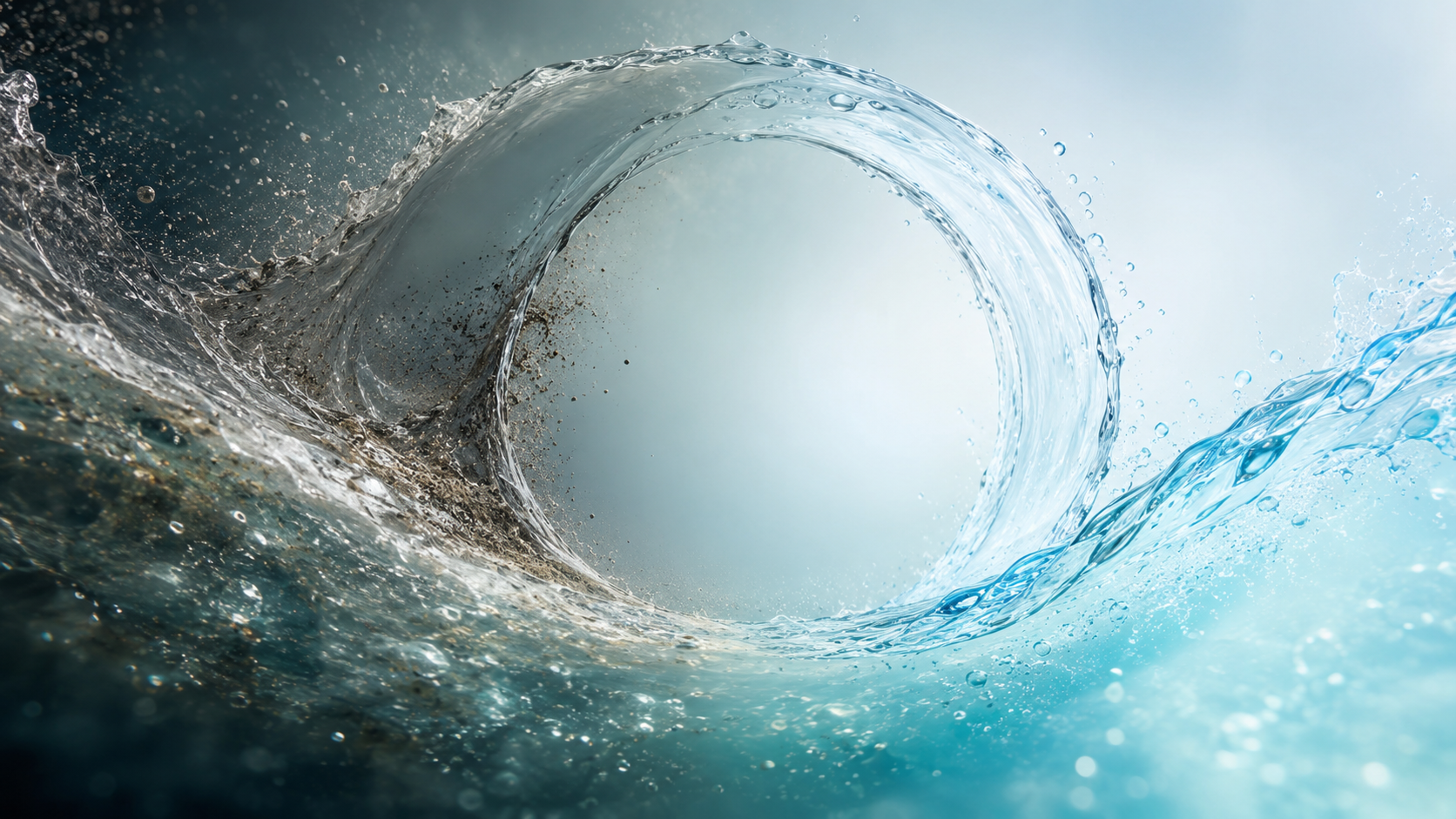
"We can use any type of water; we can use salt water, or murky water, dirty water," VIVIFY Founder and CEO Jason Herring told WPTV. "We don't have to use table water, and we don't use clean water."
That doesn't mean salt water or dirty water goes straight into hydrogen production. It means the customer doesn't have to supply clean water — the system does the work of making it usable first. Understanding that distinction is what actually makes VIVIFY's engineering claim clear.
Why Most Electrolysis Wants Pure Water
Electrolysis splits water into hydrogen and oxygen using an electric current. Do that with ordinary seawater or contaminated water instead of purified water, and a second, unwanted reaction shows up alongside it: the chloride ions present in salt water and most untreated water sources compete at the electrode and generate chlorine gas as a side product, according to peer-reviewed research on seawater electrolysis published in the journal Membranes. That chlorine evolution reaction does two things at once: wastes energy that should be producing hydrogen and allows the chlorine byproduct to corrode standard electrode materials over time.
On top of the chlorine problem, seawater and dirty water carry dissolved minerals and particulates that precipitate onto electrode surfaces during operation, according to a 2025 review in Nature Reviews Materials — reducing efficiency and shortening equipment life. That combination of corrosion and fouling is exactly why the hydrogen industry has defaulted to deionized, purified water as a feedstock: it's the input that doesn't fight the equipment.
Why This Is a Hard Problem to Solve Directly
Producing hydrogen straight from seawater or impure water, with no purification step at all, is a genuine and active area of global research, not a solved textbook exercise. Recent peer-reviewed reviews describe researchers developing specialized corrosion-resistant catalysts, selective membranes, and electrode coatings specifically engineered to suppress chlorine formation and resist scaling directly in seawater conditions. It's a genuinely hard materials-science problem, which is exactly why VIVIFY didn't try to solve it that way.
Where Pulsar™ Fits
Pulsar™ is the proprietary component inside VIVIFY's HOG™ and Flying Pig™ platforms responsible for on-demand hydrogen and oxygen separation. Electrolysis still requires purified water — that part of the process doesn't change. What's different is where the purification happens. Rather than requiring the customer to supply clean, pre-treated water, VIVIFY's platforms purify salt water and dirty water on-site, ahead of the electrolysis stage, so the input the customer provides can be salt water, murky water, or contaminated water, and the system handles the treatment internally before that water ever reaches Pulsar's electrodes.
That's a different engineering bet than the direct-seawater-electrolysis research described above and, arguably, a more practical one. Instead of inventing new electrode materials that can survive untreated seawater indefinitely, VIVIFY built water purification directly into the platform, so the electrolysis stage always sees the clean water it needs, regardless of what went in at the intake.
What "Closed-Loop" Means in Practice
VIVIFY's platforms are built around a closed-loop water architecture: the Flying Pig™ ships with a 500-gallon, factory pre-filled water tank and integrated filtration, with an annual water loss of roughly 5%, according to VIVIFY's product specifications. Water isn't consumed and discarded the way fuel is in a combustion generator — it's purified, cycled through the system, and reused, with only a small margin lost to the process over a year of operation.
That's a structurally different relationship to its fuel source than a diesel generator has to its tank: no resupply truck, no dependence on the water source being clean to begin with, and a fuel input that's available in more places than potable water is.
Tour the Platform
See the full Flying Pig™ and HOG™ specification blocks, or reach out to talk through how a water-fueled hydrogen platform fits your specific site.
Want to stay up to date on our progress? Follow VIVIFY on LinkedIn and Instagram for deployment updates and behind-the-scenes footage from the field.
