
Is Hydrogen Energy Safe? Separating Fact From Fear
Hydrogen's reputation and its actual safety data don't match. Here's what the U.S. Department of Energy, NREL, and Lawrence Berkeley National Laboratory's own research actually say about hydrogen safety.
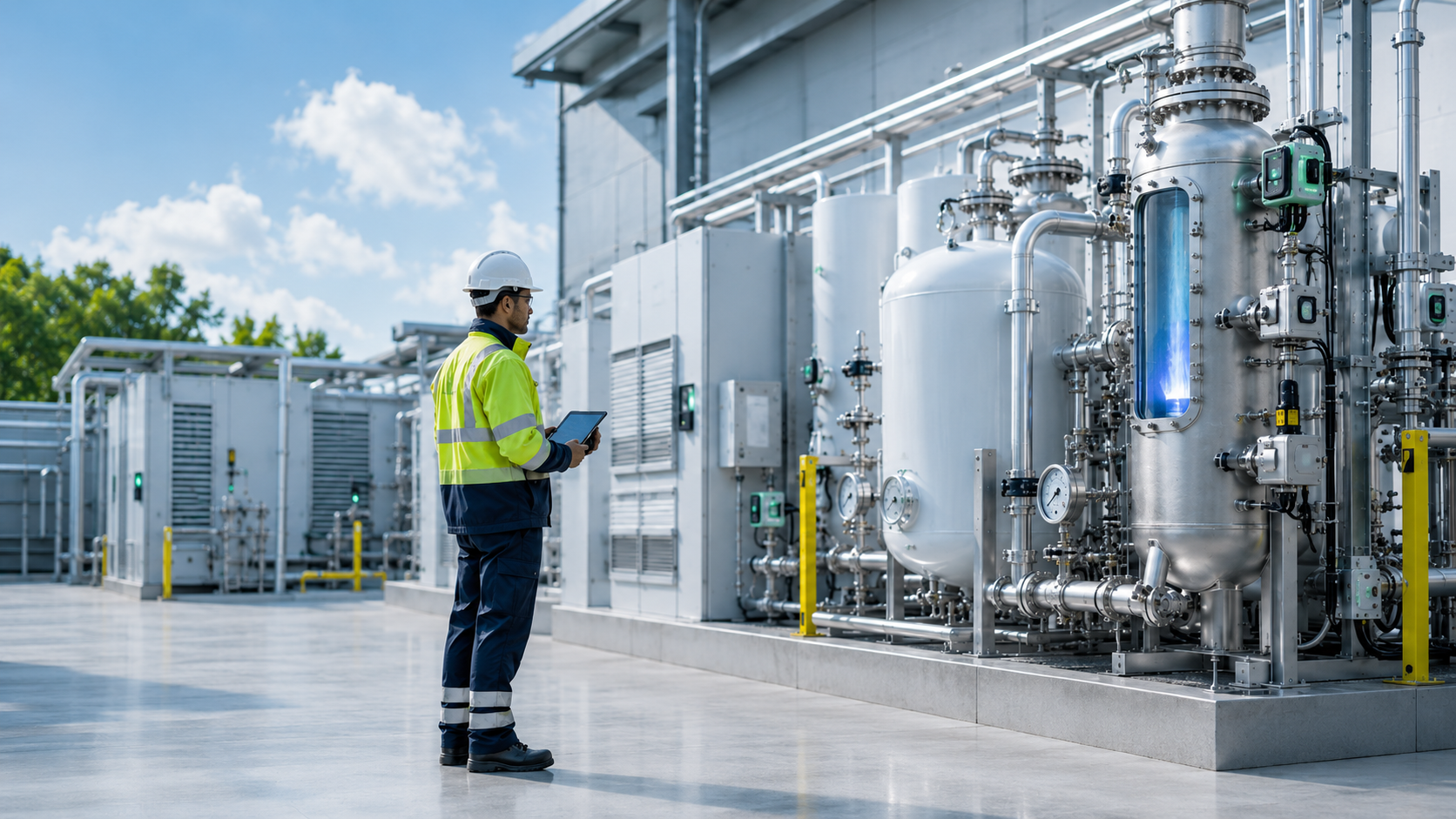
Hydrogen carries a reputation problem that its actual safety data doesn't support. Most of that reputation traces back to a single 1937 disaster and decades of pop-culture reinforcement, not to how hydrogen actually behaves in a modern, engineered system. The physics is well understood, well documented, and — in some respects — safer than the fuels already in common use.
Here's what the research actually says.
Hydrogen Is Flammable. So Is Almost Everything That Makes Power.
Hydrogen has a flammability range of 4% to 75% concentration in air, according to the U.S. Department of Energy, a wider range than gasoline vapor or methane, and it ignites at a lower energy threshold. Those facts are real, and they're also the ones that get repeated without the context that determines what they actually mean in practice.
The context: hydrogen is roughly 14 times lighter than air, according to hydrogen safety research compiled by the DOE-supported Hydrogen Tools resource. Released in an open environment, it rises and disperses rapidly rather than pooling at ground level the way heavier gasoline vapor does. A wide flammability range matters far less when the gas doesn't hang around at a flammable concentration for long — which is precisely why hydrogen's outdoor safety profile differs so much from its worst-case indoor scenario.
The Real Engineering Challenge Isn't Combustion. It's Detection.
Hydrogen burns nearly invisibly in daylight and is odorless, according to DOE's Hydrogen Program research comparing hydrogen and propane fuel safety, and unlike propane or natural gas, no additive odorant has been identified that's light enough to disperse at the same rate as hydrogen itself. That's a real, well-documented engineering constraint, and it's exactly why hydrogen systems rely on fixed and portable optical and gas detectors rather than the smell test people use for a natural gas leak.
This is a design requirement, not a flaw to be quietly worked around. Properly engineered hydrogen systems build detection in from the start rather than depending on human senses that don't work well on this particular fuel.
What a Century of Industrial Use Actually Shows
Hydrogen isn't a new industrial material. It has been produced, stored, and handled at large scale in oil refining and chemical manufacturing for generations, under safety codes and engineering practices that have matured accordingly. Lawrence Berkeley National Laboratory's comparative safety research on hydrogen, methane, and propane treats hydrogen's hazards as well characterized and manageable through known engineering controls — buoyancy-aware ventilation design, leak detection, and controlled ignition-source management — not as an unsolved problem.
Where VIVIFY's Engineering Fits
HOG™ is built around Pulsar™, a component that generates hydrogen on demand at the rate the system is consuming it, rather than producing and storing large volumes of hydrogen gas on site. That's a meaningful safety-relevant design choice on its own terms: A system that isn't holding a large standing inventory of hydrogen has fundamentally less stored energy available to release in a worst-case event than one that is.
None of this makes hydrogen risk-free — no fuel is. What the research actually supports is that hydrogen's risks are well-characterized, different in kind from gasoline's or propane's rather than categorically worse, and manageable through the same kind of engineering discipline that already governs how those older fuels are handled safely today.
See the Arsenal
See the full HOG™ specification block, or reach out to talk through how a hydrogen platform fits your specific site.
Follow VIVIFY on LinkedIn and Instagram to hear about deployment updates and get behind-the-scenes footage from the field.
