
1,000 Homes, Same-Day Power: What Rapid-Deployment Power Really Looks Like
A Florida company says its containerized generator can restore power to 1,000 homes and be running the same day it arrives on site. Here's what rapid-deployment power actually requires.
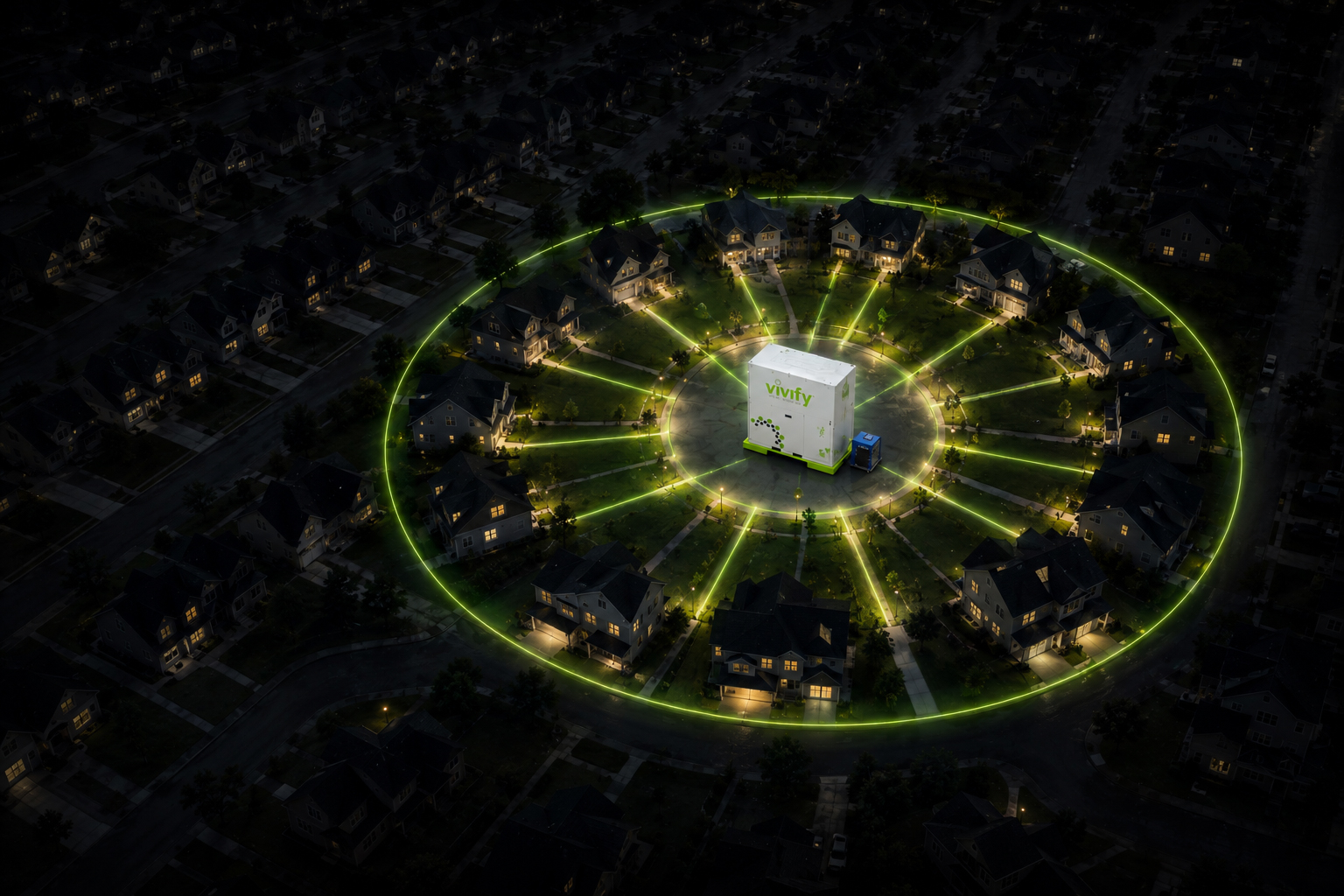
After a hurricane, the question that matters most isn't whether power will come back. It's how long that takes. For most of Florida, the honest answer has historically been measured in days, sometimes weeks. VIVIFY built the Flying Pig™ to answer it same-day instead.
Here's what that actually looks like, and why the speed is possible.
What Same-Day Power Actually Means
VIVIFY Technology, which operates a headquarters and lab in Delray Beach and a manufacturing facility in Jupiter, reports that its containerized Flying Pig™ generator can restore power to roughly 1,000 homes the same day it arrives on site. The unit runs on water rather than diesel or gas, and CEO Jason Herring said the system isn't picky about the water source. "We can use any type of water; we can use salt water, or murky water, dirty water," Herring said. "We don't have to use table water, and we don't use clean water."
That detail matters more than it might sound. A generator that requires potable water is still tethered to infrastructure a storm can knock out. A generator that runs on whatever water is available on site — including contaminated or standing water — isn't.
What 15 Minutes Is Being Measured Against
Traditional grid restoration after a major hurricane isn't measured in minutes. Following Hurricane Irma, Florida's average outage lasted 7.2 days statewide — and Monroe County's outage ran a full 20 days — even with nearly 60,000 utility workers from the U.S. and Canada mobilized to restore service, according to a peer-reviewed power-restoration study and U.S. Energy Information Administration data. Hurricane Ian and Hurricane Milton showed the same pattern is still current: Ian alone left 2.6 million Florida customers without power, some for more than two weeks, and Milton knocked out power to 3.4 million more just two years later.
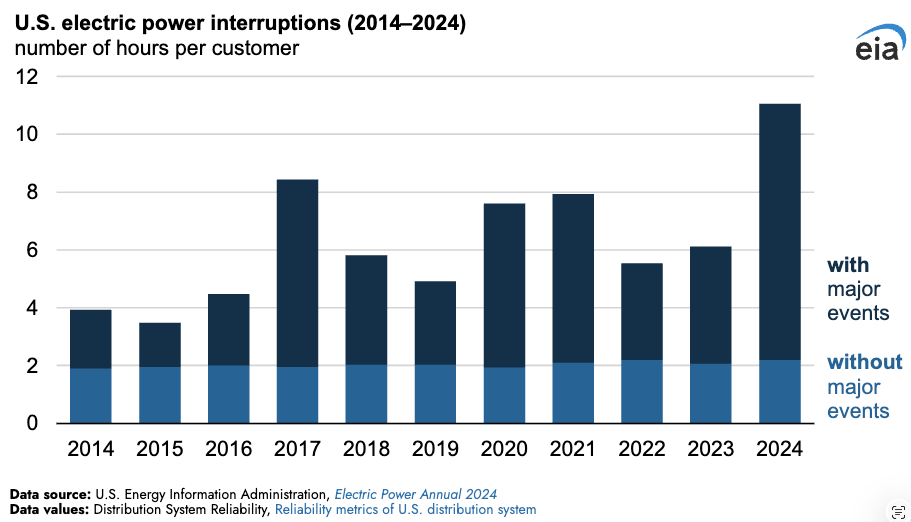
Those aren't outliers. They're the baseline a rapid-deployment system is built to beat. The gap between "restored the same day" and "restored in two weeks" isn't a matter of degree. It's the difference between a community that keeps functioning through a disaster and one that doesn't.
How the Speed Is Actually Possible
Rapid deployment isn't a marketing claim without engineering behind it. Three things make it possible:
- No fuel delivery to wait for. The unit ships with its own water supply pre-loaded, so there's no tanker truck competing with the rest of the region for the same limited fuel supply after a storm.
- Quick-connect infrastructure. Field assembly is measured in hours or less, not the days a traditional generator installation requires, with pre-installed sensors and coupling points designed for fast connection on arrival.
- Airlift capability. The units can be airlifted directly into areas cut off from the power grid — a deployment method a fuel-dependent generator can't match, since airlifting in a steady diesel supply isn't practical.
VIVIFY says it's scaling manufacturing to match that urgency: the company's Jupiter facility is targeting production of 100 units per day starting in January, alongside an expanding engineering and manufacturing workforce.
Where Rapid Deployment Actually Matters
Speed isn't just a disaster-response feature. The same rapid-deployment profile applies to remote industrial sites with no grid access, forward-operating military and government sites, and data center or commercial campuses that need power faster than a grid interconnection can deliver. But the clearest case is still the one Florida faces every hurricane season: a community that has no power and no way to know how long that will last.
Same-day power isn't a projection. It's what happens when a container arrives on site and gets to work.
Tour the Platform
Contact us to discuss a deployment use case with the VIVIFY team before this season's next storm.
Follow VIVIFY on LinkedIn and Instagram for deployment updates and behind-the-scenes footage from the field.
